
In-House vs Outsourced Software Development: A Cost Model for Startups

One senior in-house engineer in the US costs about $246,000 in year one once salary, benefits, recruiting, equipment and ramp-up are counted, or roughly $129 per productive hour. A US agency bills $100-200/hour for the same seniority. An offshore dedicated engineer costs $48,000-96,000 a year. In-house wins when the product is your core IP and you can keep the engineer busy for years; outsourcing wins before product-market fit, for defined builds and for stacks you will not maintain in-house.
What is the true cost of an in-house developer?
The true cost of a senior in-house developer in the US is $240,000-250,000 in year one, not the $155,000 on the offer letter. Salary is 63% of the bill. Benefits and employer taxes, recruiting, equipment and the first three months of reduced output make up the rest, and management time sits on top.
The salary inputs come from two sources. Glassdoor puts US senior software engineer base pay at $125,000-184,000 and median total pay at about $211,000. Levels.fyi, which skews toward large tech companies, reports median total compensation of $255,000 across 22,000 senior salaries, with a 25th percentile of $180,000. A seed-stage startup outside the Bay Area will land near the Glassdoor base range, so the model below uses a $155,000 base.
On-costs are the line founders forget. The Bureau of Labor Statistics reports that benefits make up 30.0% of total private-sector compensation as of June 2026, which is about 43% on top of wages. For a startup with a leaner benefits package, 25-30% of salary is the usual planning number: payroll taxes, health insurance, 401(k) match, paid leave and workers' compensation.
In-house vs outsourced: the annual cost of one senior engineer
Here is the year-one cost of one senior engineer under three models. Hours assume 1,900 productive hours a year for a full-time employee (2,080 minus leave and holidays) and 160 billable hours a month for contracted teams.
| Line item | US in-house | US agency | Offshore dedicated team |
|---|---|---|---|
| Salary or rate | $155,000 base (Glassdoor) | $100-200/h (Keyhole, Clutch) | $25-50/h senior (Accelerance, SecondTalent) |
| Benefits and employer taxes (30%) | $46,500 (BLS) | Included in rate | Included in rate |
| Recruiting | $5,475 internal (SHRM 2025) to $31,000 at a 20% agency fee; model uses $20,000 | $0 | $0 |
| Equipment, licenses, seats | $5,000 | $0 | $0-1,000 |
| Ramp-up (3 months at 50% output) | $19,400 | Billed from day one | Usually billed; some vendors absorb week one |
| Your management time | 2-4 h/week | 2-4 h/week | 4-8 h/week |
| Year-one total | about $246,000 | $192,000-384,000 (1,920 h) | $48,000-96,000 (1,920 h) |
| Effective hourly cost | about $129/h | $100-200/h | $25-50/h |
| Year-two total | about $205,000 | Same | Same |
Three caveats on reading this. The agency column is a full-time equivalent; most agency work is project-priced, and you do not pay for idle months. The offshore column needs the management line taken seriously: the hidden costs of offshore development add 20-40% in a well-run engagement.
Even with the overhead, the gap is wide. An offshore senior engineer at $45/hour, plus six hours a week of your product lead and 10% rework, costs about $121,000 a year. That is half the in-house number and well under half of a US agency at $150/hour ($288,000).
When should a startup hire in-house vs outsource?
Hire in-house when the engineering itself is the business and the work will not run out. Outsource when you need speed to a first version, a defined build, or skills you will not need full-time. Most startups under 20 people do best with a hybrid.
| Situation | In-house wins | Outsourced wins | Hybrid |
|---|---|---|---|
| Stage | Post product-market fit, funded 18+ months | Pre-revenue, MVP, validating | Seed to Series A |
| Work type | Continuous core-product work, deep domain logic | Defined scope with an end date, or ongoing iteration at low volume | Core logic in-house, build capacity outsourced |
| Budget per engineer | Can carry $200,000+ a year plus equity | A fixed project quote or a monthly retainer sized to hours; no salary, benefits or equity | One in-house lead plus a 2-4 person outsourced team |
| Skills | One stack you will keep for years | Specialist skills (mobile, AI, security) used occasionally | Generalist lead, specialist vendors |
| Hiring market | You can recruit senior engineers in 4-8 weeks | Hiring is slow or you have no technical interviewer | Vendor becomes the interviewer |
| Control needs | Daily pairing, same room, same hours | Weekly demos and written scope are enough | Lead owns architecture; vendor executes |
The rule of thumb: outsource until you can keep a senior engineer busy on core product for two years, then hire that person and keep the outsourced team for everything else.
What are the risks of each model and how do you mitigate them?
In-house risk is concentration and time; outsourced risk is quality and control. Both are mitigated by process, not by the choice itself.
In-house risks
- Hiring time. Senior engineers take 6-12 weeks to recruit and 3 months to reach full output. Mitigation: start the outsourced build in parallel so the hire inherits a working product.
- Bus factor. One engineer holds the system in their head. Mitigation: documentation, code review and a second contributor, even part-time.
- Fixed cost. $205,000 a year whether or not there is work. Mitigation: hire for sustained core work only; buy capacity for spikes.
- Bad hire. SHRM's 2025 benchmark found only 20% of organizations track quality of hire. Mitigation: paid trial, take-home on your real codebase, references.
Outsourced risks
- Code quality and ownership. Mitigation: repository and cloud accounts in your name, IP assignment in the contract, code review visible to you.
- Scope drift and hourly creep. Mitigation: fixed scope and fixed quote before code, change requests for anything new.
- Communication lag. Mitigation: written specs, a committed overlap window, weekly demos on staging.
- Vendor dependence. Mitigation: documented code, an onboarding doc a new engineer could follow, and the right to hire the vendor's engineers if you part ways.
These mitigations are how we run every engagement: fixed scope and fixed quote, weekly demo builds on staging, documented code, and the client owns the repository from day one. See our dedicated development team for the model.
How does a hybrid model work?
A hybrid model puts one technical lead on your payroll and an outsourced team under them. The lead owns product decisions, architecture and vendor management; the outsourced team owns delivery. It is the cheapest way to get in-house judgment with outsourced capacity.
- The in-house product lead. A senior engineer or technical product manager, in your time zone, who writes specs, reviews pull requests and demos to the founders. Year-one cost about $246,000 as modeled above, or less for a strong mid-level engineer.
- The outsourced build team. Two to four engineers at $25-50/hour, so $8,000-32,000 a month at full time. They ship against the lead's specs and demo weekly.
- The split. Core domain logic, data model and anything that is a trade secret stay with the lead. UI, integrations, mobile, automation and maintenance go to the team.
- The transition. As revenue grows, the lead hires engineers in-house and shifts the vendor to specialist work (security audits, AI features, a mobile app) or a smaller maintenance retainer.
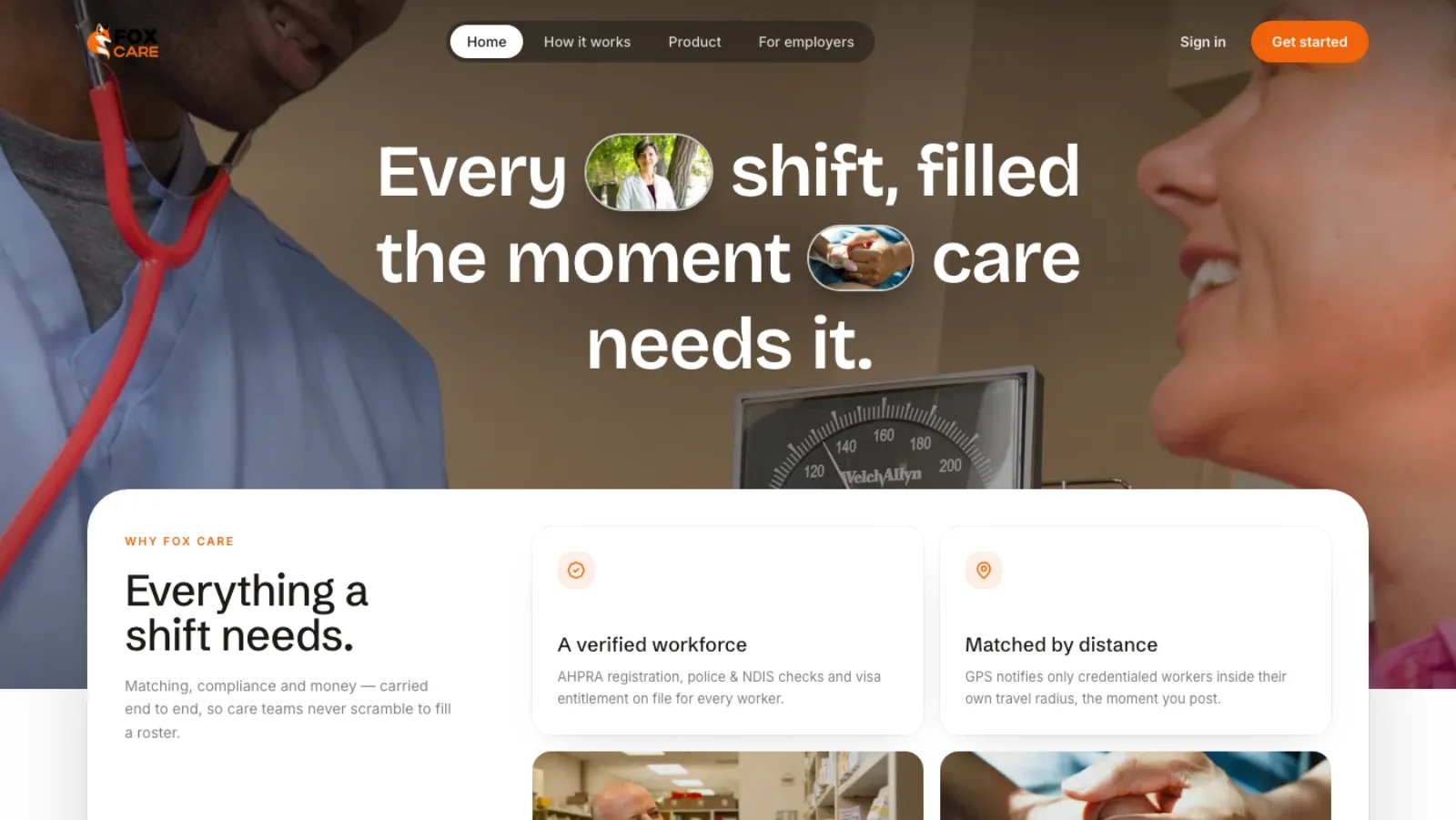
Total for a lead plus three offshore engineers: roughly $400,000-500,000 a year including management overhead. Three senior in-house engineers plus a lead would run $900,000-1,000,000. Fox Care, an Australian healthcare shift marketplace, was built this way: the client set product direction from Australia and we did the engineering.
Questions
What is the true cost of an in-house developer?
About $246,000 in year one for a senior US engineer: $155,000 base, $46,500 in benefits and employer taxes, $20,000 recruiting, $5,000 equipment and $19,400 of ramp-up at reduced output. Year two drops to about $205,000. Add equity and 2-4 hours a week of management. A mid-level engineer runs 25-35% less on each line.
Does outsourcing hurt code quality or ownership?
Not if the contract and process are right. Ownership is settled by putting the repository, cloud and store accounts in your name and assigning IP in the contract. Quality is settled by code review you can see, tests, and weekly demos on a staging environment. Vendors who resist any of those are the ones that hurt quality.
How do I transition from an agency to an in-house team later?
Hire the lead first, give them a month inside the agency's workflow, then move ownership of architecture decisions to them. Because the repository was always yours, there is no handover; the agency's engineers become reviewers and then specialists. Insist on documentation and an onboarding guide from day one so a new hire is productive within two weeks.
Can an outsourced team act as my CTO?
An outsourced team can make technical decisions, choose the stack, run security and set up infrastructure, which covers most of what a seed-stage CTO does day to day. It cannot sit on your board, raise money with you or own the long-term technical strategy as a founder would. Many founders run with an agency as the technical function until Series A, then hire. How we work with startups explains that arrangement.
How much does an outsourced development team cost per month?
A dedicated offshore engineer costs $4,000-8,000 a month at senior level in South Asia or Southeast Asia, $10,000-15,000 in Eastern Europe or Latin America, and $20,000-40,000 at a US agency. Maintenance and iteration retainers start lower; ours are sized to the hours you need and quoted as a fixed monthly figure after a discovery call. Contact us with a scope and we reply within 24 hours with a fixed quote.
Have a project in mind?
Send us the scope and we reply within 24 hours with a fixed quote you can put next to the in-house number.
Start a conversation