
The full guide
What does an AI automation agency actually do?
We take a manual process your team repeats every week, build software that does it with a language model in the loop where judgment is needed, and keep it running. That covers chatbots and assistants, workflow automation across your existing tools, and AI features built into your own product.
- AI chatbots and assistants. Customer support, sales qualification and internal knowledge bots that answer from your documents (retrieval-augmented generation, or RAG), hand off to a human when confidence is low, and live on your website, WhatsApp, Slack or email.
- Workflow automation. Invoices, matching, data entry, report generation, lead routing and document processing, connected through n8n, Make or custom code to the tools you already use.
- AI features in your product. Scoring, summarization, extraction, search and recommendations built into your web or mobile app by the same engineers who build the rest of it (web development, mobile apps), plus the dashboard that shows what the automation did.
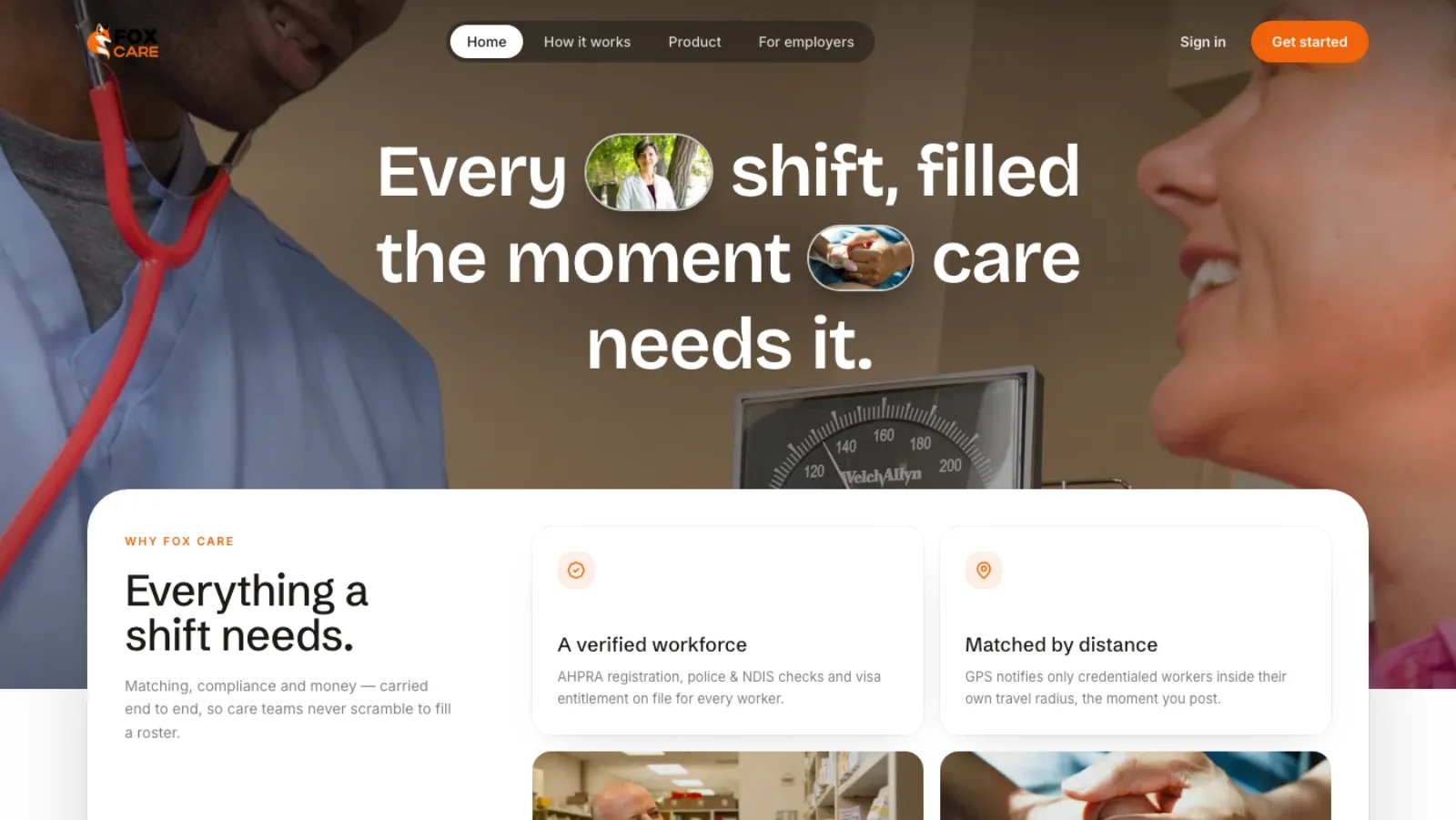
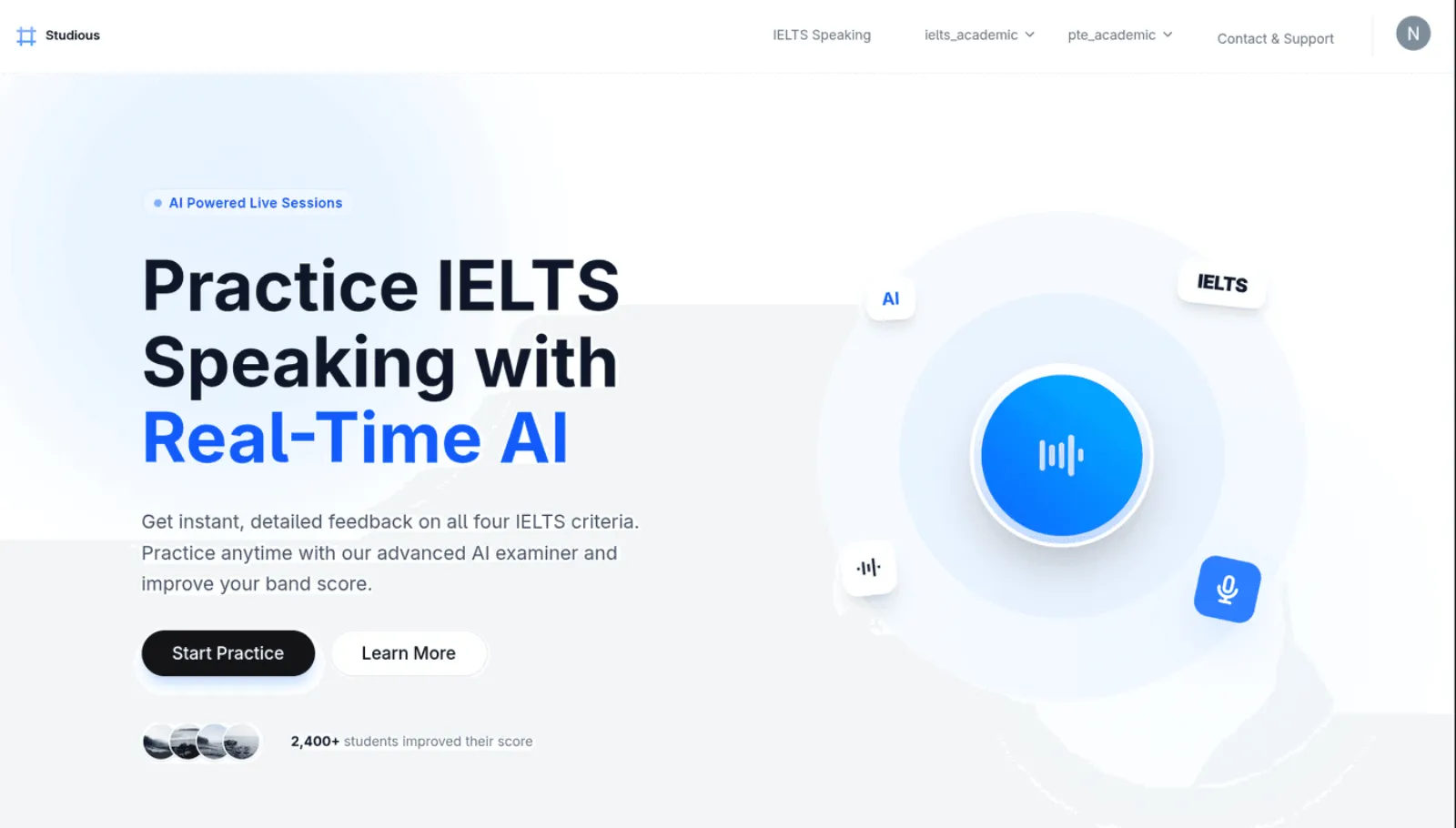
Two examples in production: Studious Prep scores IELTS speaking in realtime with instant band feedback. Fox Care, an Australian healthcare shift marketplace, uses distance matching and automated weekly invoicing at.
What processes should a small business automate first?
Start with the process that is high-volume, rule-heavy and already digital: invoicing, inbound email triage, data entry between systems and first-line support. These pay back fastest because the inputs are structured and the failure cases are easy to catch. The time savings below are planning estimates, not client metrics.
| Manual process | What we automate | Typical time saved |
|---|---|---|
| Creating invoices from timesheets or bookings | Generate, reconcile and send invoices on a schedule; flag exceptions | 4-10 hours/week |
| Answering repeat support questions | RAG chatbot over your help docs with human handoff | 30-60% of tickets deflected |
| Qualifying inbound leads | Enrich, score and route leads to the right person with a draft reply | 2-5 hours/week |
| Matching supply to demand (shifts, jobs, inventory) | Rules + model ranking with a human approve step | 5-15 hours/week |
| Re-keying data between CRM, spreadsheets and accounting | Scheduled syncs with validation and error alerts | 3-8 hours/week |
| Reading contracts, forms or CVs | Extract fields to a database; summarize; flag missing items | 70-90% faster per document |
We score candidates on volume, clarity of rules and cost of an error, then pick one for a pilot. Discovery includes writing the process down first, because automating an undocumented process is where most AI projects fail.
How is AI automation priced for a small business?
Every engagement gets a fixed scope and a fixed quote after a discovery call. We don't publish a rate card: the number depends on how many systems the workflow touches, how much of your data has to be indexed or cleaned, and whether the automation lives in a no-code tool or inside your product. Model usage is passed through at the provider's cost under your own account, never marked up.
| Engagement | Timeline | What's included | How it's priced |
|---|---|---|---|
| Single-workflow pilot (n8n, Make or custom) | 2-4 weeks | Process written down, one automated workflow, exception alerts, a run log | Fixed quote after discovery |
| RAG chatbot or assistant on your docs | 4-8 weeks | Document indexing, retrieval with citations, human handoff, evaluation set, one channel | Fixed quote after discovery |
| AI feature inside your product (scoring, extraction, search) | 6-16 weeks | Model selection, evaluation set, API and UI, logging dashboard, security review | Fixed quote after discovery, milestones tied to demos |
| Multi-workflow automation program | 10-24 weeks | Process audit, prioritized backlog, several workflows shipped in sequence, monthly reporting | Fixed quote per phase |
| Monitoring, tuning and new workflows | rolling | Run monitoring, prompt and model tuning, new small workflows, priority replies | Monthly retainer sized to the hours you need |
Model API usage for a small-business workflow is usually a small line next to the build, and it is billed by the provider directly to your account, so you can see it and cap it.
Should you build custom or buy an off-the-shelf tool?
We tell you which during discovery, even when the answer is a tool rather than us.
| Question | Points to buy | Points to build |
|---|---|---|
| Is the process unique to your business? | No | Yes |
| Does it need your private data or your product's database? | No | Yes |
| Will per-seat SaaS pricing exceed a build within 12-18 months? | No | Yes |
| Do you need control over which model runs and where data goes? | No | Yes |
Most of our work mixes n8n or Make for plumbing, custom code for anything touching your data model, and a model API for judgment calls.
Which AI models do we use, and why?
We pick the model per task rather than per project: Claude for long documents, agents and tool use; GPT for its ecosystem and realtime voice; open-source models when data can't leave your infrastructure or volume makes API pricing expensive. The choice goes in the technical plan, behind a thin layer so you can switch providers later.
- Claude (Anthropic). Our default for document-heavy work, multi-step agents and tasks where following instructions precisely matters. Large context windows handle a whole contract or help center in one call.
- GPT (OpenAI). Used for the realtime voice API, image generation or an integration that only exists in that ecosystem.
- Open-source (Llama, Mistral, Qwen via vLLM or Ollama). Used for on-premise or VPC deployments, high-volume classification and cost-sensitive steps.
Small, cheap models handle routing and classification; large models handle steps that need reasoning. An evaluation set built from your real data decides which goes where.
How do we handle your data and privacy?
Your data stays in your accounts, prompts are never used to train provider models, and the whole system can run inside your own cloud if your industry requires it. An AI automation gets the same access controls, logging and review as any other production software we ship.
- API keys and model accounts are created under your organization, with zero-data-retention settings where the provider offers them.
- Personal data is minimized, redacted or tokenized before it reaches a model when the task allows.
- Every automated decision is logged with inputs, output and approver.
- Our cybersecurity team reviews prompt-injection risk, secrets handling and access scopes before launch.
- For regulated clients we pin deployment to a region (for example Australia) and document data flows for your compliance reviewer.
Every engagement follows our five-stage process: discovery with a fixed scope and quote, design, weekly demos on staging, testing against your evaluation set plus a security audit report, then launch with monitoring and a monthly retainer sized to the hours you need. We reply within 24 hours; shipped AI work is on the projects page.