
The full guide
What does a mobile app development company deliver?
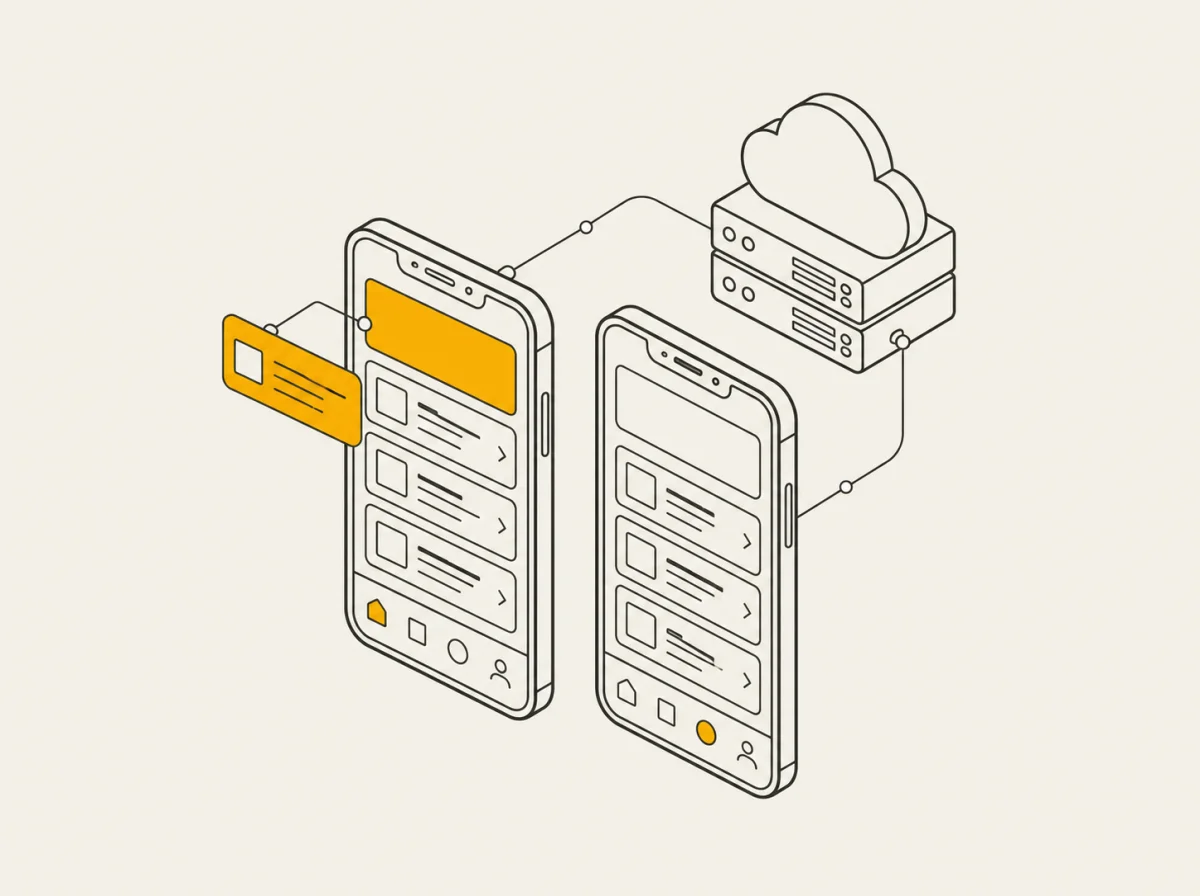
You get a working iOS and Android app, the backend behind it, store listings that pass review, and a team that stays on after launch. We build in React Native with Expo, so one codebase ships to both the App Store and Google Play, and the same engineers who built your web platform can share its API and auth.
A typical engagement covers:
- Product scope and prototype. A clickable prototype of every screen before code starts.
- App build. React Native (Expo), TypeScript, offline handling, push notifications, deep links.
- Backend and admin. Node.js or Next.js API, PostgreSQL, an admin panel to manage users and content.
- Integrations. Payments (Stripe, in-app purchases), maps, analytics, auth providers, camera and audio.
- Store submission. App Store Connect and Google Play Console setup, screenshots, privacy forms, review fixes.
- After launch. Over-the-air updates for JavaScript changes, crash monitoring, and a monthly retainer sized to the hours you need.
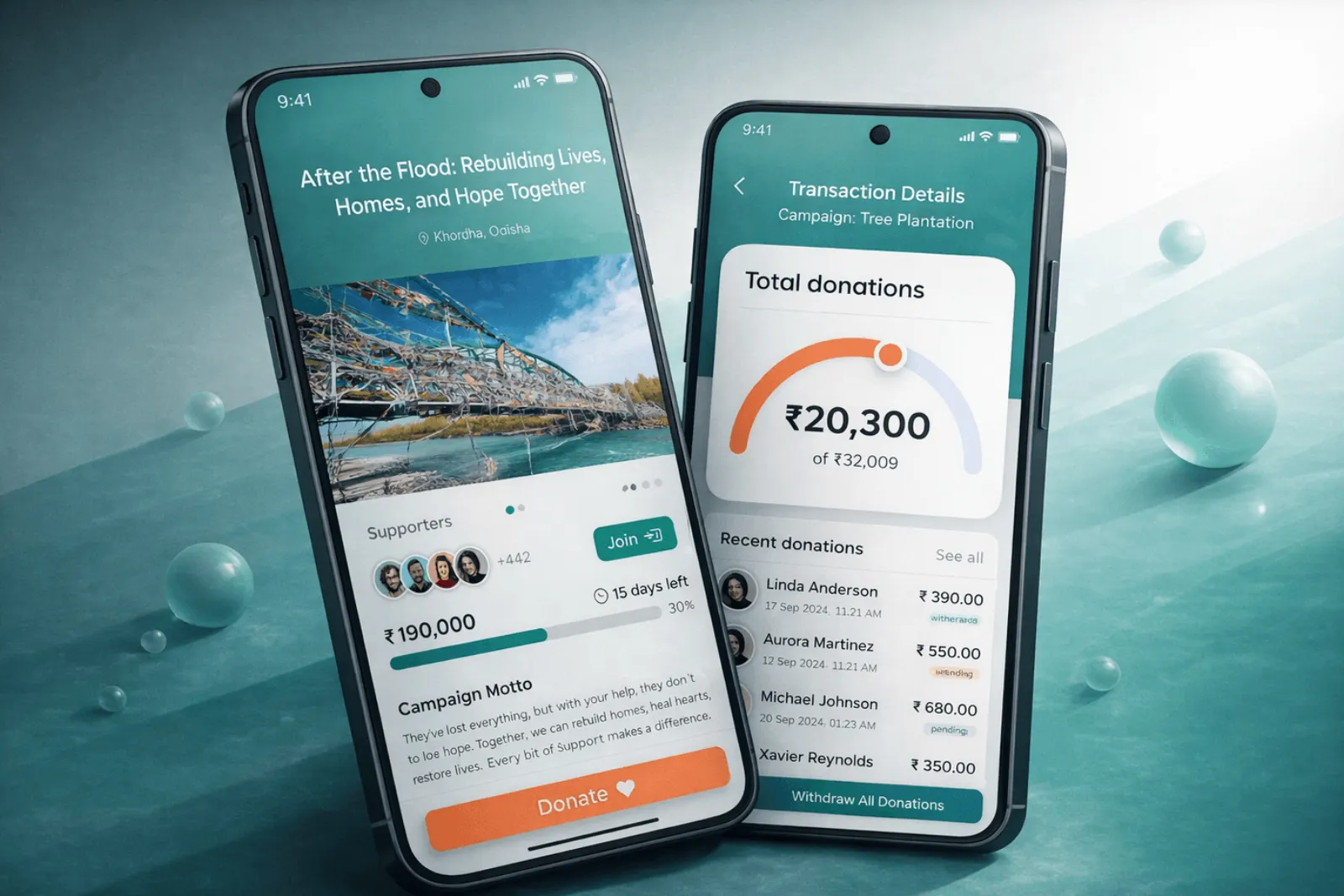
Proof you can download: Cyp India is a React Native Android app on the Play Store with membership, events and a member directory. Studious Prep captures speech in realtime and scores it instantly, the same audio-streaming and latency work a voice-driven app needs.
How is a mobile app priced?
Every app gets a fixed scope and a fixed quote after discovery. We don't publish a rate card: the quote is set by screen count, integrations and backend complexity, and the same "booking app" can be a four-week build or a four-month one depending on roles and realtime features. What we can tell you up front is how the complexity tiers break down and what each includes.
| App complexity | Examples | Timeline | What's included |
|---|---|---|---|
| Simple | Membership or directory app, content app, booking with a few screens | 4-8 weeks | Prototype, React Native build, backend API, store submission |
| Medium | Marketplace app, social features, payments, push, admin panel | 8-14 weeks | Everything in Simple plus payments, push, admin panel, analytics |
| Complex | Realtime chat or audio, AI features, offline sync, multi-role, high-volume backend | 14-24 weeks | Everything in Medium plus realtime infrastructure, offline sync, load testing |
| Add-ons | Realtime speech or video, AI scoring, hardware integrations | +2-6 weeks | Scoped and quoted as separate line items |
| Maintenance retainer | OS updates, store compliance, bug fixes, small features | rolling | Monthly retainer sized to the hours you need |
Two costs people forget, both paid by you directly: Apple's annual developer account fee and Google Play's one-time registration fee, plus backend hosting for an early-stage app. See MVP development cost in 2026 for typical ranges. We list all of it in the quote so there are no surprises after launch.
React Native vs native: which should you choose?
React Native is the right choice for most startup and SMB apps because it ships to both platforms from one codebase at roughly 60-70% of the cost of two native apps, with no visible difference for users. Native (Swift and Kotlin) wins when the app is the hardware: heavy 3D, AR, custom camera pipelines or platform features the day they're released.
| Factor | React Native (Expo) | Native (Swift + Kotlin) |
|---|---|---|
| Codebases | 1 | 2 |
| Typical cost | 1x | 1.5-2x (two teams or two passes) |
| Time to both stores | 4-24 weeks | 8-40 weeks |
| Performance | Near-native for UI, lists, forms, media and most animations | Best for 3D, AR, heavy on-device compute |
| Native APIs | Full access via Expo modules and custom native modules | Direct |
| Updates | Over-the-air JS updates without store review | Every change goes through review |
| Team you need | React engineers (same as your web team) | iOS and Android specialists |
| Best for | Marketplaces, SaaS companions, memberships, education, health, retail | Games, camera-first apps, hardware-tied products |
If we think native is the honest answer for your app, we'll tell you on the discovery call. We'd rather lose the project than build the wrong thing.
Why hire React Native developers from ReliaBuilds?
Because we build the whole product, not just the app shell. Most React Native agencies hand you an app and point you elsewhere for the backend, the admin panel and the web version. We ship all of it, and the same team keeps working on it after launch.
- Senior engineers at offshore rates. Our quote for the same scope sits well below a typical US or UK shop. Rates vary widely by region; see offshore development rates by country.
- Fixed scope, fixed quote. No hourly meter. The quote is agreed before code starts and changes only if the scope does.
- Weekly test builds. Every Friday you get a TestFlight or Play internal-testing build and a short demo.
- Security and performance checked before release. Our cybersecurity team reviews auth, storage and API access; we benchmark cold start, list scrolling and bundle size.
- You own everything. Repository, store accounts, cloud accounts, all in your name.
How do we build and ship to the App Store and Play Store?
We run a five-stage process that gets a fixed quote agreed first, then delivers a testable build every week until both stores approve the app.
- Discovery. A roadmap, fixed scope and quote, and a technical plan covering platforms, integrations and backend.
- Design. Clickable prototype in Figma, plus a design system for consistent components on both platforms.
- Develop. Weekly TestFlight and Play internal builds, staging backend, documented code in your repository.
- Test. Device testing on real iPhones and Android phones, a security audit report and performance benchmarks.
- Launch. Store listings, screenshots, privacy forms, review submission and fixes, crash monitoring, and post-launch support on a retainer.
We reply to every inquiry within 24 hours with a project assessment. See shipped work on the projects page.