
The full guide
What kinds of AI chatbots do we build?
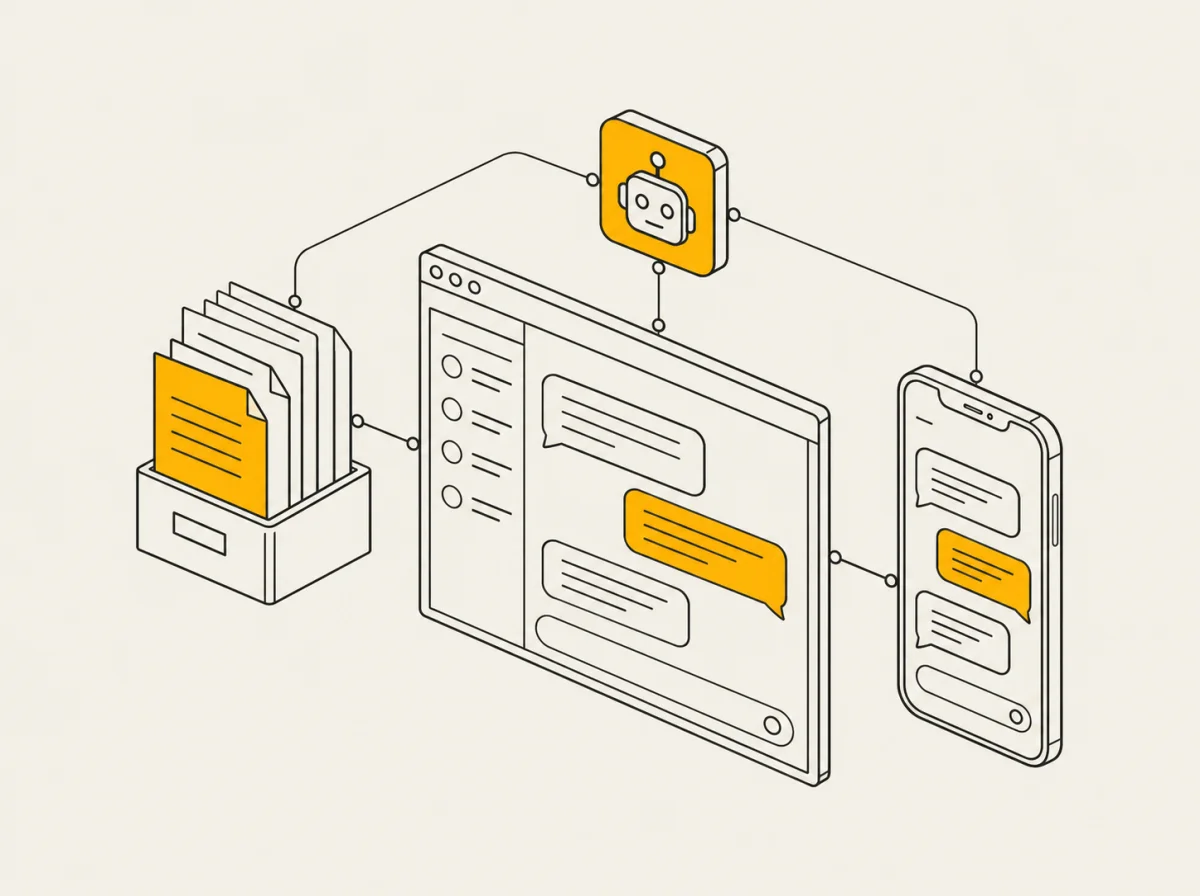
We build four kinds of custom chatbot for business: customer support, sales and lead qualification, internal knowledge assistants, and voice or speech-based tools. Each one is a large language model (LLM) connected to your own data and systems, not a generic bot with your logo on it.
- Support chatbots. Answer questions from your help centre, policies and past tickets, and hand off to a human with the full conversation when unsure.
- Sales chatbots. Qualify visitors, answer product questions and book calls or push leads into your CRM.
- Internal knowledge assistants. Staff ask questions of handbooks, SOPs and documents and get answers with sources.
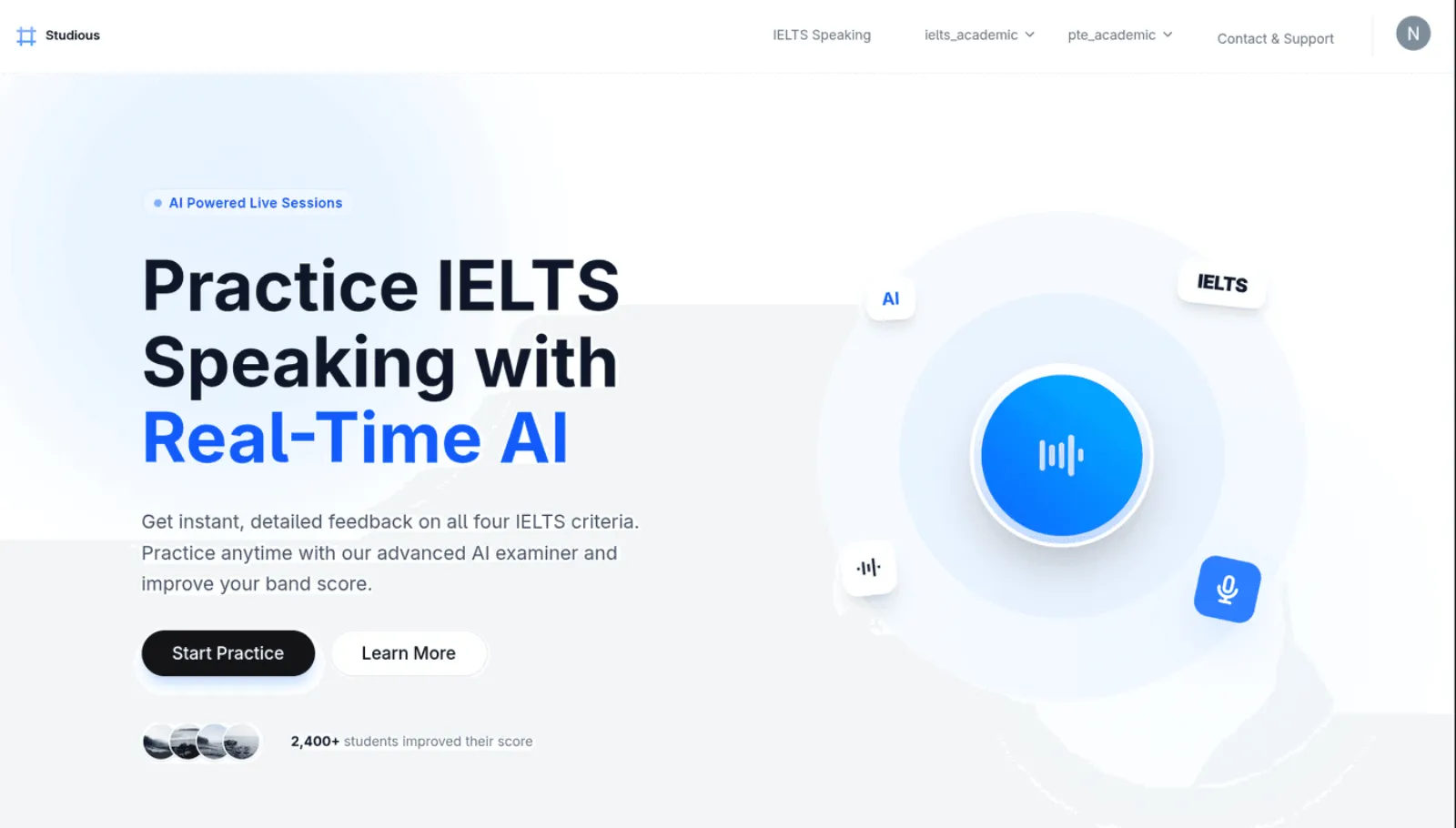
- Voice and speech. Studious Prep, which we built, scores spoken IELTS answers in realtime and gives instant band feedback. It has. That is speech and scoring rather than a support bot, but it is the same production AI engineering.
Chatbots are one part of our wider AI automation work, which also covers workflow automation and AI features inside products.
What is a RAG chatbot and do I need one?
A RAG (retrieval-augmented generation) chatbot looks up relevant passages from your documents at the moment of each question, then writes an answer from them. You need one when answers must come from your content and stay current, which covers most business use cases.
The alternatives are fine-tuning and plain prompting. Here is how they compare.
| Approach | Best for | Weak spot |
|---|---|---|
| RAG | Answers grounded in your docs, policies and product data; content that changes often | Needs clean source documents and good retrieval |
| Fine-tuning | A fixed tone, format or narrow task done consistently | Doesn't reliably add new facts; costly to update |
| Prompting only | Simple, general tasks and quick prototypes | Can't know your private data |
| RAG plus fine-tuning | Large products needing both accuracy and a specific style | More moving parts to maintain |
Most clients start with RAG. It can be trained on your own documents without retraining a model, and updating the chatbot means updating the documents. We cite sources in each answer, so your team can check what it said and why.
Which AI model should power the chatbot?
Choose the model by the task, the data sensitivity and the response speed you need, not by brand. We build the chatbot so the model can be swapped later, which keeps you from being locked into one vendor.
| Option | Strengths | Consider when |
|---|---|---|
| Claude (Anthropic) | Strong at long documents and careful, instruction-following answers | Policy-heavy support, knowledge assistants |
| GPT (OpenAI) | Broad tooling, strong general ability | Mixed tasks, fast prototyping |
| Open-weight models (Llama, Mistral) | Run on infrastructure you control | Strict data residency or high-volume use |
We test two candidates on your real questions during the pilot and recommend the one that scores best for your use case, then show you the results.
How do we handle data privacy?
Your data stays yours: we use your documents only to power your chatbot, and we choose a hosting and model setup that fits your privacy requirements. Before building, we agree in writing what data goes in, where it is stored and who can see it.
- Access control. The chatbot only retrieves documents the signed-in user is allowed to see.
- Provider terms. We use API plans that do not train on your data, and tell you which provider handles what.
- Redaction. Sensitive fields such as card numbers can be masked before they reach the model.
- Hosting choice. Cloud region and self-hosted models are options when regulation or contracts require them.
- Security review. Our cybersecurity team reviews the integration, including prompt-injection risks, before launch.
If you work under a specific regulation (HIPAA, GDPR, the Australian Privacy Act), tell us on the first call so it shapes the design.
Where can the chatbot live?
We deploy the chatbot wherever your users already are, on one shared backend so answers stay consistent across channels.
- Your website. An embedded chat widget built into your Next.js or existing site.
- WhatsApp. Through the WhatsApp Business platform, useful for customers who already message you.
- Slack. For internal assistants that answer in the channels staff use.
- Inside your product. A chat or voice feature in your web or mobile app.
What drives the cost of a chatbot?
We don't publish prices. Chatbot work varies too much, so we give a fixed quote after discovery. Six factors move the quote.
| Cost driver | Why it matters |
|---|---|
| Knowledge sources | A tidy help centre is quick; scattered PDFs, wikis and databases need ingestion work |
| Integrations | Reading a CRM is simple; booking, refunds or updating records needs careful design |
| Channels | One website widget is lighter than web plus WhatsApp plus Slack |
| Accuracy and safety needs | Regulated or high-stakes answers need evaluation sets, guardrails and human review |
| Voice or multilingual | Speech and extra languages add components and testing |
| Ongoing usage | Model calls, hosting and monitoring are running costs that scale with traffic |
We start with a small pilot on one channel and one knowledge source, so you see real answers before committing to a full build. Ongoing support runs on a monthly retainer.
How do we build and launch a chatbot?
We use our standard five-stage process, adapted for AI, with a fixed scope and quote before code and a working demo every week.
- Discovery. We define the questions the chatbot must answer, review your content, and agree on success measures and a fixed quote.
- Design. Conversation flows, tone, hand-off rules and a clickable prototype.
- Develop. Ingestion pipeline, retrieval, model integration and channel connections, with weekly demos on staging.
- Test. We run a set of real questions and check accuracy, sources and failure behaviour, plus a security review.
- Launch. Deploy, monitor conversations, and tune with real traffic. Typical pilots take weeks, not months, and we confirm the timeline in the discovery call.
Code and cloud accounts are in your name. You work with senior engineers in your hours.