
Ecommerce Development
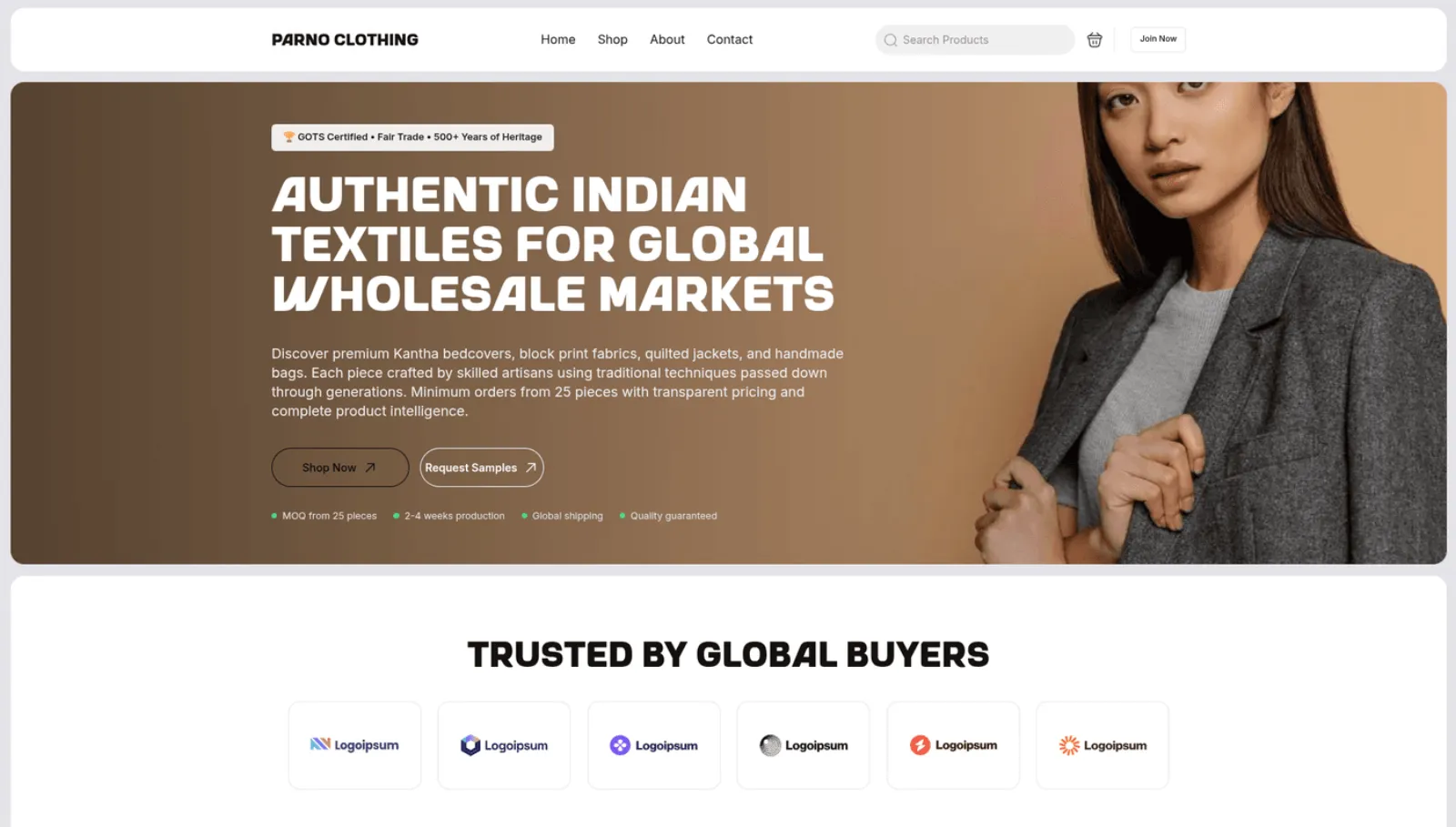
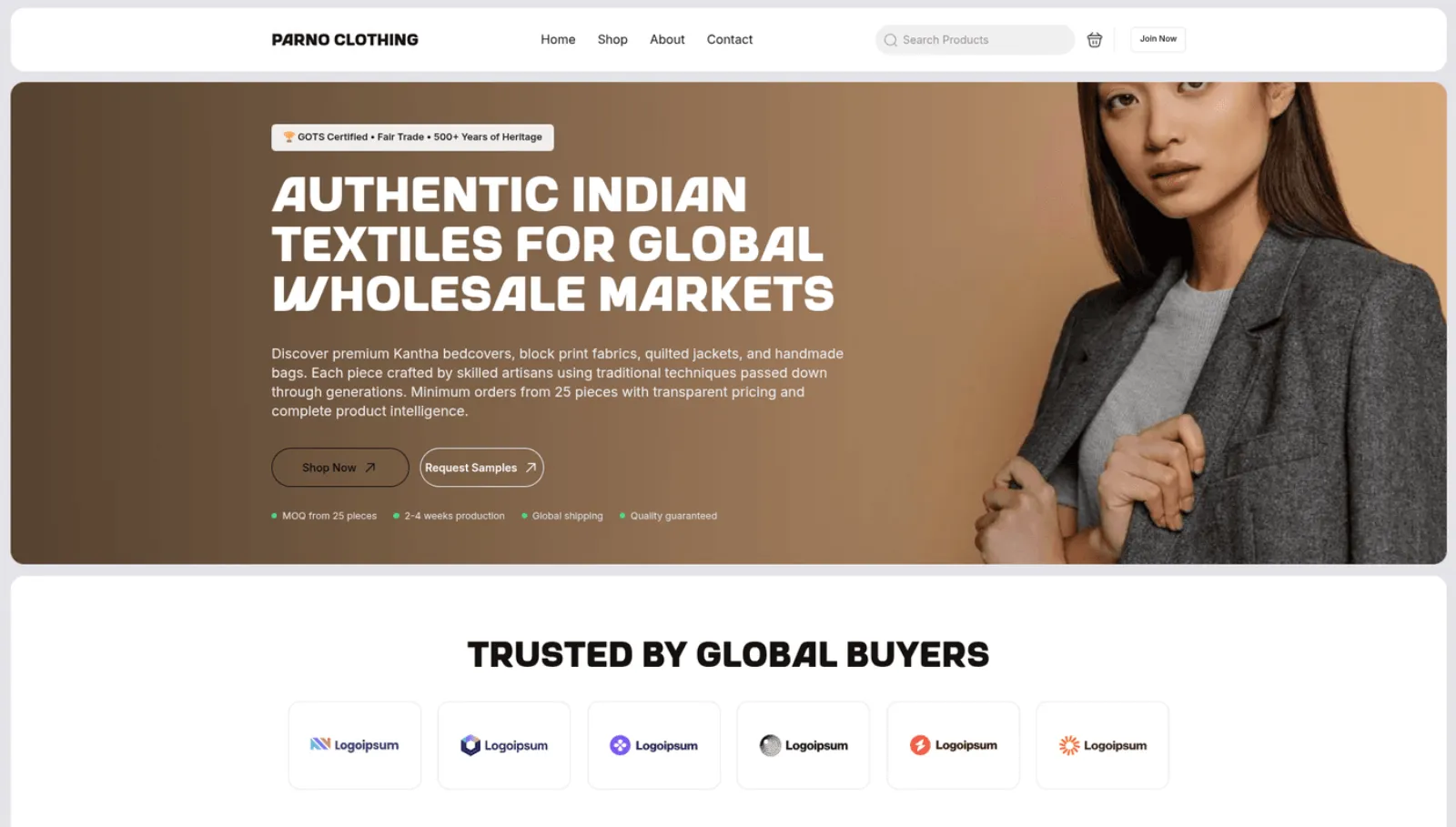
ReliaBuilds is an ecommerce development company for startups and SMBs in the US, UK, Australia, Spain and the UAE. We design and build custom ecommerce websites, headless storefronts on Next.js, marketplaces, B2B portals and shopping apps, with a fixed scope and quote before any code, weekly demos on staging, and a repository you own. We built Parno Clothing, a fashion storefront with checkout and stock sync, and Ponnadhar, a store with bKash and Nagad payments.
What does an ecommerce development company do?
An ecommerce development company designs, builds and maintains the software that lets people browse, buy and receive products online: storefronts, checkout, payments, inventory, order management and the apps and integrations around them. At ReliaBuilds that means a product team of designers and engineers working from a fixed scope, with weekly demos, delivering code you own. We build for startups and SMBs in the US, UK, Australia, Spain and the UAE.
Most ecommerce projects we see are not "build Amazon". They are a D2C brand that has outgrown a theme, a wholesaler who wants an ordering portal, or a founder with a marketplace idea. We design the experience (UI/UX design), build the store and back office (web development) and the iOS and Android apps (mobile app development), and you deal with one team throughout. If you are testing a new idea, start with a first release through MVP development.
What have we built in ecommerce?
We built Parno Clothing, a fashion storefront engineered for speed, with a full checkout and stock sync so what shoppers see matches what is on the shelf. Fashion is a demanding category: image-heavy pages, sizes and variants, and a mobile-first audience that leaves when pages are slow.
We also built Ponnadhar, a handloom saree store launched in 2026. It has a full checkout, bKash and Nagad mobile wallet payments, and delivery to all 64 districts of Bangladesh. It is our proof that we integrate local payment methods and delivery rules, not just a card form. If your market has wallets, bank transfers or buy-now-pay-later options that shoppers expect, we have done that kind of integration before.
For other builds see the projects page.
What ecommerce products can we build?
We design and build the full range of ecommerce products, from a single storefront to multi-vendor platforms and shopping apps. Each is quoted as a fixed scope after discovery, and if your idea is not on this list, send it anyway.
| Product type | Typical users | What the first version usually includes |
|---|---|---|
| D2C storefront | Shoppers, brand owners | Fast catalogue, product pages, cart, checkout, order emails, admin |
| Headless commerce on Next.js | Shoppers, merchandisers | Next.js front end, commerce API behind it, server-rendered pages, CMS content |
| Marketplace and multi-vendor | Buyers, sellers, operators | Seller onboarding, listings, split payments, commissions, disputes, admin |
| Marketplace seller dashboard | Sellers | Listings, orders, payouts, stock, performance reports |
| B2B and wholesale portal | Trade buyers, sales teams | Account-based pricing, quick reorder, quotes, credit terms, invoices |
| Subscription commerce | Subscribers, support | Plans, recurring billing, pause and skip, dunning, customer portal |
| Booking and rental commerce | Renters, hosts, operators | Availability calendar, deposits, bookings, returns, damage notes |
| Food and grocery delivery | Customers, restaurants, couriers | Menus, basket, slots, order tracking, courier assignment |
| Ecommerce mobile app | Shoppers | iOS and Android app, push notifications, saved carts, in-app checkout |
| POS, inventory and ERP sync | Store staff, ops teams | Stock sync across channels, order sync to your accounting or ERP system |
| Loyalty and rewards | Repeat customers | Points, tiers, referral codes, coupons, reward redemption |
| AI product search and recommendations | Shoppers | Natural-language search, related products, personalised suggestions |
| Social and live commerce | Shoppers, creators | Shoppable video or feeds, live sale events, social login, share links |
| Payment and local wallet integrations | Shoppers, finance | Stripe and PayPal, regional wallets, bank transfers, refunds, reconciliation |
| Migration off Shopify or WooCommerce | Merchants | Catalogue, customer and order import, redirects that protect SEO, cutover plan |
| Custom checkout and cart | Shoppers | One-page checkout, address validation, shipping and tax rules, promo logic |
| Shipping, returns and order management | Ops, support | Carrier rates, labels, tracking, return requests, refund workflow |
| Digital products and gated content | Buyers, creators | Instant delivery, licence keys, downloads, member access |
We integrate with the services you already use (payments, shipping carriers, email and SMS, analytics, accounting) rather than rebuilding them. If you rely on a particular ERP, warehouse or marketplace channel, tell us on the first call so the integration is scoped, not discovered late.
When does headless ecommerce make sense?
Headless makes sense when the shopping experience is a core part of your brand and a theme is holding you back. In a headless build, the storefront is a separate Next.js application that talks to a commerce back end through an API. You get full control of design and speed, and you can reuse the same back end for a mobile app, a B2B portal or a second storefront.
It is not always the right call. A standard catalogue with a few hundred products and no unusual flows is often better served by a hosted platform, and we will say so. We recommend headless when:
- You need a design or checkout flow a theme cannot support.
- Page speed and Core Web Vitals matter to your search traffic and conversion.
- You sell through several channels (web, app, wholesale) from one catalogue.
- Your content and commerce need to be edited by different teams.
Next.js gives server-rendered product pages that search engines read easily, image optimisation and fast navigation. We pair it with whichever commerce engine suits the project, or a custom API when your model does not fit an off-the-shelf one. For search visibility on top, see SEO and marketing.
Is a custom store better than Shopify?
A custom store is better when your business model does not fit a hosted platform's rules. Shopify and WooCommerce are strong choices for many shops, and for a simple catalogue we would not talk you out of them. A custom build earns its cost in specific situations.
| Hosted platform | Custom or headless store | |
|---|---|---|
| Time to first sale | Days to weeks | Weeks to a few months |
| Design freedom | Limited by theme and apps | Total |
| Unusual flows (vendors, rentals, quotes) | Apps and workarounds | Built into the core |
| Running costs | Monthly fees and per-app charges add up | Hosting in your account, no platform fee |
| Data and code | On the platform | Yours, in your own repository |
| Integrations | Whatever the app store offers | Anything with an API |
How do payments and security work in ecommerce?
We integrate PCI-compliant payment providers like Stripe so card data never touches your servers. The provider handles the card form and the sensitive data, and your store receives only a confirmation and a token. We do not claim any certification ourselves.
In practice:
- Hosted card fields. Card details are entered into the provider's secure components, not stored by you.
- Local methods. Wallets and bank transfers shoppers expect in your market, as we did with bKash and Nagad on Ponnadhar.
- Webhooks and reconciliation. Orders are confirmed from the provider's verified events, so a closed browser tab does not lose a paid order.
- Least-privilege access. Admin roles so staff only see what they need, with secrets kept out of the code.
- Your accounts. Hosting and payment accounts are opened in your name, so you hold the keys.
- A security review before launch. We recommend a security audit for any store that takes payments.
Can AI improve an ecommerce store?
Yes, in specific, measurable places: search that understands what shoppers mean, recommendations from browsing and purchase history, product descriptions drafted from your catalogue data, and support answers grounded in your own policies. We add these once the basics work, because AI on a slow or poorly organised catalogue does not help. See AI automation for how we scope those features.
How much does ecommerce development cost?
We quote a fixed figure after discovery, based on the number of screens and user flows, the integrations, and the business rules that must be encoded. We do not publish prices, because two stores with the same catalogue size can differ widely in payments, shipping rules and back-office needs. A multi-vendor marketplace with split payouts is a bigger scope than a single-brand storefront.
You can use the budget bands on our contact form to tell us what you have in mind. If the scope is too big for that figure, we say so and propose a smaller first release rather than stretching a plan.
Why use an outside team instead of hiring in-house?
An outside team gets you a designed, built and tested store without a recruitment cycle, and you keep the code. Hiring a lead, two engineers and a designer takes months before a line ships, and ecommerce has seasons: a launch window or a sales peak does not wait.
| In-house hires | ReliaBuilds | |
|---|---|---|
| Time to start | Recruitment first | Discovery call this week |
| Scope and cost | Salaries before a store exists | Fixed quote after discovery |
| Visibility | Whatever your team reports | Weekly demos on staging |
| Code ownership | Yours | Yours, from the first commit |
| Skills | Hire for each one | Design, web, mobile, SEO and security in one team |
We work as a distributed team across the UK, India and Bangladesh, working your business hours in any time zone, with same-day replies and invoices in your currency. For how the monthly model works, see dedicated development team.
How does an ecommerce project start with us?
It starts with a paragraph from you and ends with a launched, monitored store. The steps are the same for every engagement.
- Brief. Describe what you sell, who buys it and the systems you use. We reply within 24 hours.
- Discovery. Goals, customers, must-haves and the "not in v1" list. You receive a roadmap, a technical plan and a fixed quote.
- Design. A clickable prototype and design system, with the product page and checkout designed first.
- Build. Weekly demo builds on staging, documented code.
- Test and launch. Payment, speed and security checks, zero-downtime deploy, monitoring and post-launch support.
Questions
How long does it take to build a custom ecommerce website?
A typical web store takes 6-12 weeks from the signed scope. Marketplaces, B2B portals with account pricing, or stores with several integrations sit at the longer end. We confirm the timeline in the fixed quote after discovery, with milestones tied to weekly demos.
Can you build a headless ecommerce store on Next.js?
Yes. We build Next.js storefronts with server-rendered product pages, a commerce back end behind an API, and a CMS for content. The same back end can power a mobile app or a wholesale portal later.
Can you build an ecommerce mobile app?
Yes. We build iOS and Android apps in React Native, including store submission, alongside the web store and shared back end. See mobile app development. Many stores launch web-first and add the app once repeat buyers justify it.
Can you add local payment methods and wallets?
Yes. On Ponnadhar we integrated bKash and Nagad with a full checkout and delivery to all 64 districts of Bangladesh. For your market, tell us which wallets, bank transfers or instalment options shoppers expect and we scope them in discovery.
Can you move our store off Shopify or WooCommerce?
Yes. We migrate products, customers and orders, set up redirects so your search rankings are protected, and plan the cutover so you are not offline during the switch.
Do we own the code and the data?
Yes. The repository is created in your GitHub organisation, cloud and third-party accounts are opened in your name, and IP assignment is part of the standard contract.
Have a project in mind?
Tell us what you sell, who buys it and which systems you already use. We reply within 24 hours with a scoped plan and a fixed quote.
Start a conversation