
EdTech Software Development
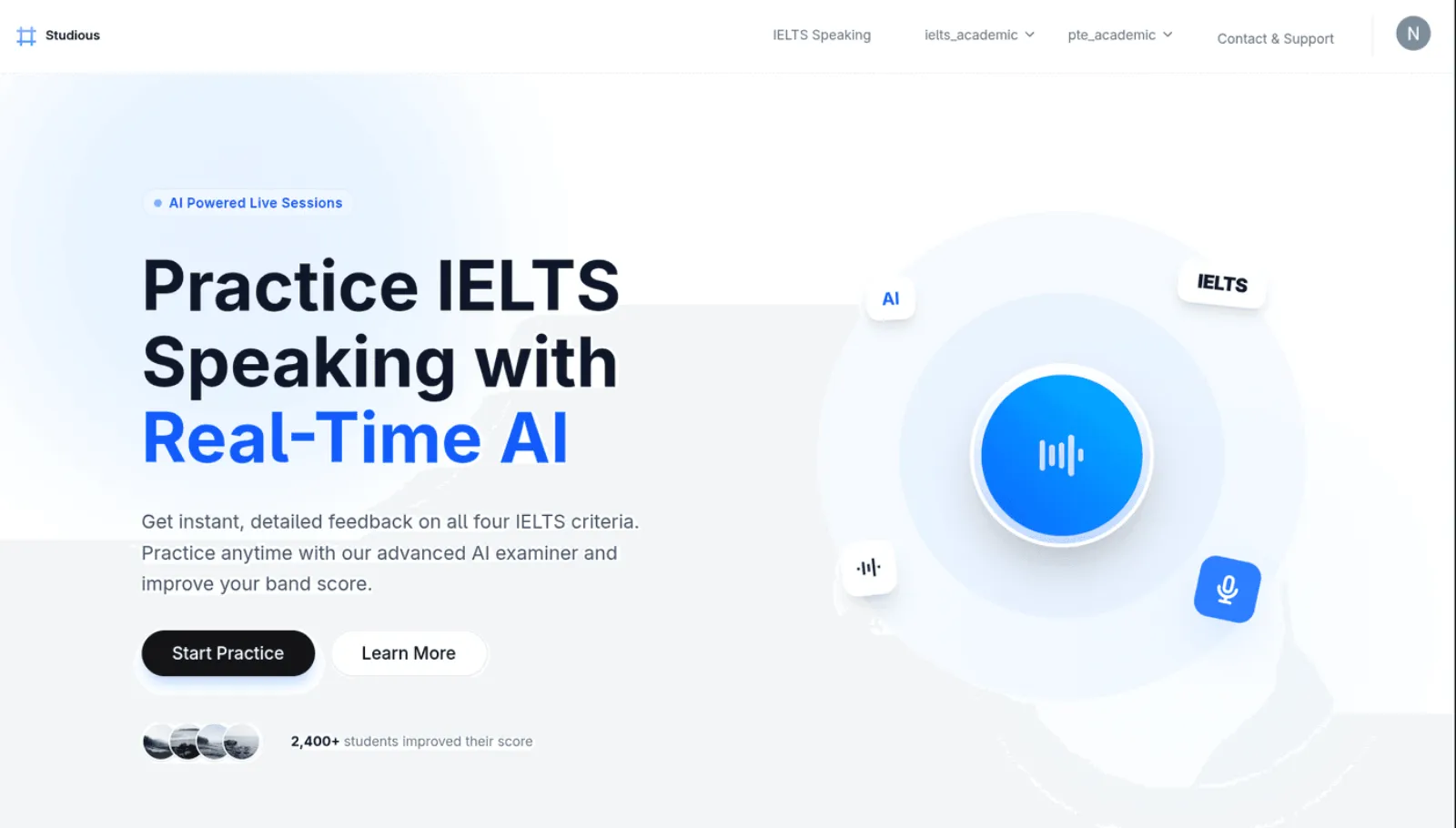
ReliaBuilds is an edtech software development company that designs and builds e-learning platforms, learning apps and AI tutoring products for startups and education businesses in the US, UK, Australia and Canada. We scope at a fixed quote before code, demo weekly on staging, and you own the repository. Our proof is Studious Prep, an AI IELTS speaking product we designed and built.
What does an edtech software development company do?
It designs and builds the software learners and teachers actually use: a course platform, a practice app, a tutoring product or a tool that automates marking. A good edtech partner starts from the learning outcome, not the feature list, and builds the smallest product that proves learners improve. Everything else (admin tools, reporting, integrations) follows from that.
ReliaBuilds works as that partner. We cover the UI/UX design, the web and mobile build, and the AI layer in one team, so the product feels like one thing rather than a course site with a chatbot bolted on. Edtech is a sector we have delivered in, with named, live proof below.
What edtech products do we build?
We design and build the full range of edtech software, from AI tutors to school systems, and most real projects combine two or three of these.
| Product type | What it is | What we typically build |
|---|---|---|
| E-learning platform | Courses, lessons, quizzes, progress tracking | Web app on Next.js, learner dashboard, admin and content tools |
| AI tutor or practice app | Learner practises, AI responds and scores | Speech or text input, scoring service, instant feedback screens |
| Mentorship or cohort platform | Matching, scheduling, sessions, messaging | Profiles, booking, payments, notifications |
| Learning mobile app | Short daily sessions on a phone | React Native for iOS and Android |
| Learning management system (LMS) | Courses, cohorts, grading for schools or companies | Course builder, enrolments, assignments, gradebook, reports |
| Online exam and test-prep platform | Timed practice tests and mock exams | Question banks, timers, auto-marking, score analytics |
| Language learning app | Speaking, listening and vocabulary practice | Audio recording, spaced repetition, AI feedback |
| Live classes and virtual classroom | Scheduled live sessions with a tutor | Video integration, attendance, recordings, chat |
| Tutoring marketplace | Students find and book tutors | Tutor profiles, availability, booking, payments, reviews |
| School and institute management | Admissions, timetables, fees, parent updates | Student records, timetables, fee reminders, parent portal |
| Corporate training and onboarding | Staff training with completion tracking | Learning paths, quizzes, certificates, manager dashboards |
| Kids learning and gamified app | Short playful lessons for children | Game mechanics, rewards, parental controls |
| Course marketplace and creator platform | Educators sell their courses | Storefront, checkout, video hosting hand-off, creator payouts |
| University admissions and student services | Applicants, advisors | Application tracking, document upload, counselling bookings |
| AI content and quiz generation | Teachers create material faster | Generate quizzes and summaries from your own material, human review step |
| Learning analytics dashboards | Schools, programme managers | Engagement, progress and outcome reports from your platform data |
Each is a normal software product with learning-specific rules on top. That is why we scope it like any other build: screens, flows, integrations, an explicit "not in v1" list, then a fixed quote. For the engineering side, see our web development and mobile app development pages.
What have we built in edtech?
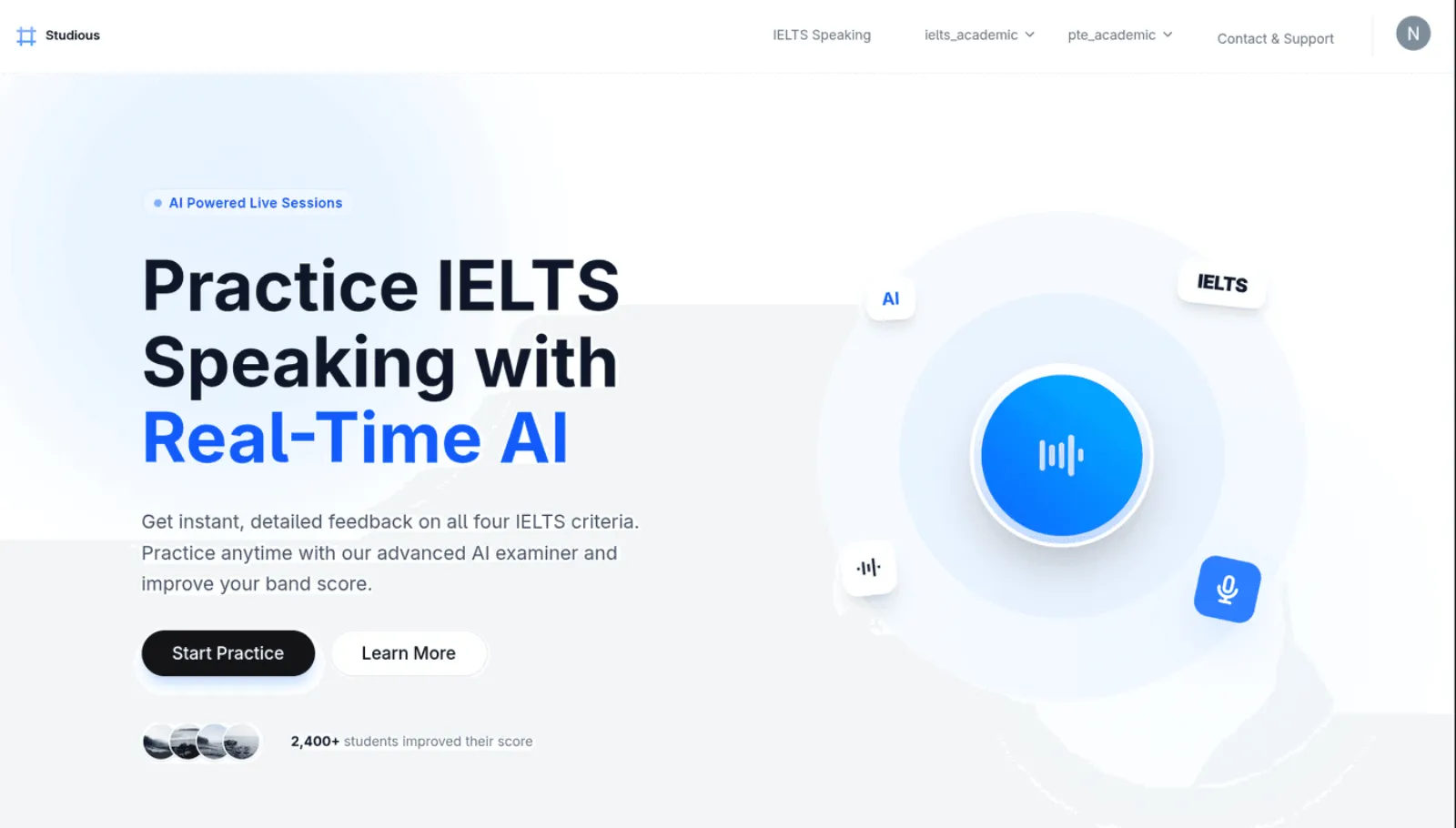
Our clearest proof is Studious Prep, an IELTS speaking practice product with realtime speech scoring and instant band feedback. We designed and built it, and it launched in 2025.
IELTS speaking is a hard problem to practise alone. Learners usually need a tutor to listen and score them, which is slow and expensive. Studious Prep puts that loop in software: the learner answers a question out loud, the answer is scored by AI, and the band feedback comes back immediately. The interface has to stay out of the way while someone is mid-sentence, then present feedback clearly afterwards.
We have also delivered edtech and mentorship platforms for other clients, including Unithrive / UniStrive and Linux Socials. See the projects page for what is public.
How do you build an AI tutoring app?
You build it around one tight loop: the learner does something, the AI evaluates it, and the learner sees useful feedback within seconds. Get that loop right first, then add everything around it. Most AI tutoring apps fail on feedback quality or latency, not on the number of features.
- Pick one skill and one input. Speaking, writing, maths working or a quiz answer. One input type per first release.
- Define what "good feedback" is. Write the rubric with a subject expert. The AI is only as useful as the rubric behind it.
- Build the scoring service. Hosted models with a structured rubric, streamed back to the screen so the learner is not left waiting.
- Design the feedback screen. This is the product. Clear score, clear reasons, one next step.
- Test with real learners before scaling. Short usability rounds catch confusing feedback faster than any metric.
Our AI automation team builds this inside your product's codebase, and our AI chatbot development page covers conversational tutors.
How is e-learning platform development different from a normal web app?
The core engineering is the same; the differences are in content, progress and trust. E-learning platform development adds a content model (courses, modules, lessons), progress and completion tracking, assessment logic, and often several user roles at once: learner, teacher, parent or administrator.
- Content structure. Decide early whether content is authored by you, by teachers, or imported. It shapes the whole data model.
- Progress that survives. Learners switch devices. Progress, streaks and results need to sync reliably.
- Roles and permissions. A teacher should see their class and nobody else's.
- Reporting. Admins and teachers need clear views of who is learning and who has stalled.
- Payments. Subscriptions, one-off course purchases or institution licences each need different billing logic.
What about student data, privacy and compliance?
We design edtech products for student privacy: minimal data collection, role-based access, encrypted storage and clear deletion paths. Education buyers in the US, UK and Australia will ask about FERPA, COPPA, GDPR and similar rules, and your product needs answers ready.
We do not claim your product is compliant because we built it. Compliance depends on your contracts, policies and how you operate, not only on code. What we do is build the technical foundations those frameworks expect and document the decisions, so your legal adviser has something concrete to review. If you need a deeper review before a school or district deal, our cybersecurity service covers audits and penetration testing.
How does an edtech build run with us?
An edtech MVP with us typically runs 6-12 weeks from kickoff to a product real learners can log into, with weekly demos on staging. Design comes first, usually 2-4 weeks for a focused product, so you can put a clickable prototype in front of learners before engineering starts.
| Phase | What happens | What you get |
|---|---|---|
| Discovery | Learner, outcome, scope, technical plan | Fixed scope and fixed quote |
| Design | Prototype, design system, usability rounds | Figma files you own |
| Build | Weekly increments on staging | Demo every week |
| Launch | Zero-downtime deploy, monitoring | Live product and documented code |
The detail of scoping a first release is on our MVP development page. Our team works across the UK, India and Bangladesh, and we set a daily overlap window in your working day before the project starts.
Questions
How long does edtech app development take?
A focused edtech MVP takes 6-12 weeks after discovery, with 2-4 weeks of design at the start. Timelines grow with the number of user roles, content types and integrations. We confirm the schedule in writing with the fixed quote, and weekly demos let you see progress rather than trust a date.
Can you build an AI tutor for my subject?
Yes, if the subject has a clear way to judge a good answer. We have built AI scoring with instant feedback for IELTS speaking. The hard part is the rubric, so we work with you or your subject expert to define it before building the scoring service.
Will the platform be FERPA or COPPA compliant?
We design for student privacy and build the technical foundations those rules expect, but compliance depends on your policies, contracts and operations as well as code. We document the data flows so your legal adviser can review them. We do not certify products as compliant.
Do you build mobile apps for learners?
Yes. We build iOS and Android apps in React Native, which suits short daily practice sessions and shares an API with your web platform. Many edtech products start on web and add a mobile app once learners show they come back.
Who owns the code and the design files?
You do. Repositories, hosting and third-party accounts are created under your name, and design files and the design system are assigned to you on payment. There are no proprietary frameworks tying you to us.
What do you need from me to get a quote?
A short description of who is learning, what they should be able to do afterwards, and a rough budget band. Send it through the contact page. We reply within 24 hours with a scoped plan and a fixed quote after discovery.
Have a project in mind?
Tell us who is learning, what they should be able to do after a session, and the budget band you have in mind. We reply within 24 hours with a scoped plan and a fixed quote.
Start a conversation